Showing posts with label Book Reviews. Show all posts

Sunday, September 4, 2022

Book Review: "The Land of Little Rain" by Mary Hunter Austin


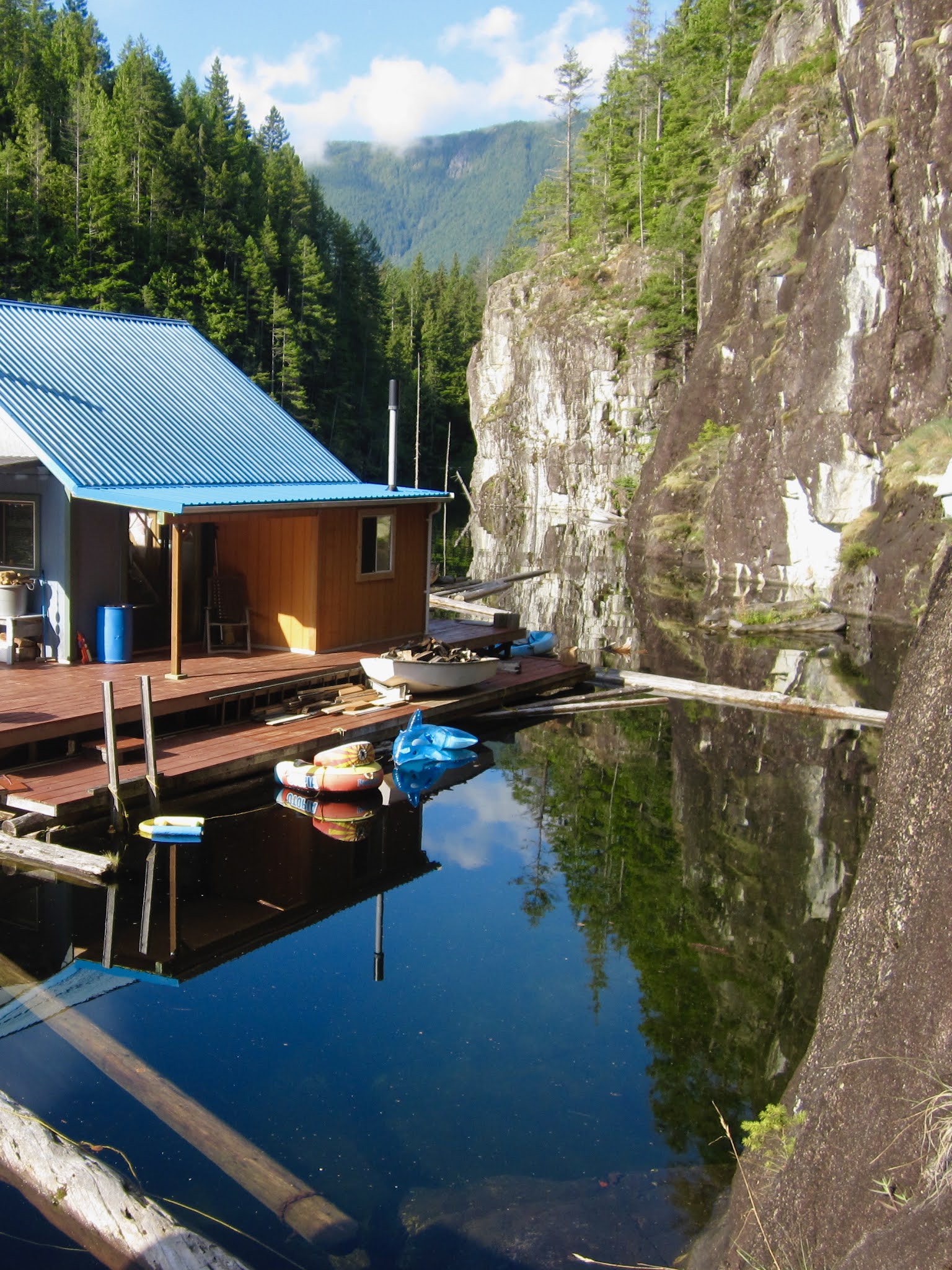
Summer's a great time for me to read books, especially ones available for my Kindle e-reader. Up the lake at the float cabin, I have easy access to lots of books without having to carry them back and forth in our boat. 

I use my new Kindle Paperwhite with its backlit screen indoors and at night without the need for an external light source. 

My trusty 2010 Kindle Keyboard is the reader of choice while floating in a tube in our natural swimming pool behind the cabin. This old model is less sensitive to heat in direct sunlight and I worry less about dropping it in the water.

My choice for this month's review was read right here while lounging in a cool location on hot summer days.


Summer heat here in Coastal British Columbia is nothing compared to the high and low deserts on the eastern side of the Sierra Nevada range in southwestern United States. That arid and sparsely populated environment was chronicled by Mary Hunter Austin in her book The Land of Little Rain, originally published by Houghton-Mifflin in 1903.

Mary Hunter Austin was unique. She traveled mostly alone on foot through California's desert wilderness in the 1890s. Another unique feature was that Austin's books were published under her own name. As such, she became a well recognized early nature writer of the American Southwest. She was also a champion and example for women desiring to break away from stereotypical expectations of the day. In addition to being an author, she was an artist. Her sketches became illustrations in her books.


The Land of Little Rain is a collection of Austin's observations of the people, places, plants and animals of the canyons, hills and deserts east of the southern Sierra Nevada range. Each chapter focuses on a specific area, environment, geologic feature, or interesting inhabitants including miners, shepherds, and Mexican and Native American inhabitants.

Over her lifetime (1868-1934), Austin wrote over 30 books and many more essays, articles and poems for publication. Her early 20th Century prose writing style was typical of that era with long sentences including detailed descriptions. Each phrase creates a vivid mental picture of the subject matter.

I enjoy reading historically based books that take me back to a time gone by. My grandmother always said I was born a generation too late. I think there's a lot of truth to what she said.

Do you like to read historical accounts and memoirs? What are some of your favourites? -- Margy

Visit the monthly Book Review Club for teen/young adult and adult fiction over at Barrie Summy's blog.

Also shared with Your the Star at Stone Cottage Adventures and Kathryn's Book Date

Wednesday, November 10, 2021

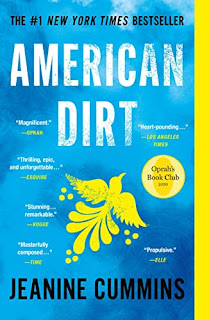
Book Review: "American Dirt" by Jeanine Cummins

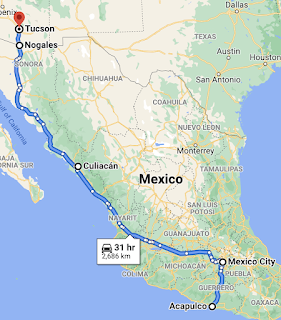
I'm currently in Arizona and just finished reading American Dirt by Jeanine Cummins (Flatiron Books, 2020). In fact, I finished reading this compelling novel in Tucson, Arizona, the destination for Lydia and her eight young old son Luca after they escaped tragedy in their home town of Acapulco, Mexico.

There are mixed feelings in the United States about undocumented immigrants. Those feelings are more evident here in Arizona. There are few people that hold the middle ground. Many want to continue building the wall and deter border crossings at all costs. Others have sympathy for undocumented immigrants and provide them with empathy and support.

I grew up and in California. As a teen, I spent summers with my grandparents near Modesto, a major agricultural area. Much of the labour was provided by undocumented immigrants. I saw how whole families and single men were forced to live in squalid conditions without recourse. Later, when I became a teacher, then a principal, I saw how the fear of discovery weighed heavily on daily life, and how the power of street gangs took the place of cartels.

Jeanine Cummins has first hand knowledge of immigrant issues. She also spent years in research and sought personal experiences for her so novel it would tell a true to life story.

The Review: Lydia Quixano Pérez befriends an unassuming man who visits her book store not knowing he's a cartel lord. Her husband is a journalist who writes an expose about this same man. Lydia is conflicted because she feels she knows the gentle side of Javier. It turns out she is wrong, almost dead wrong. After her family of sixteen was gunned down at a party at her parent's home, she knew she had to flee. With the far reaching arms of the cartel leader, she knew it had to be fast and far, all the way to el norte.

Lydia and Luca follow the same trail as many other immigrants searching for safety and economic improvement. After a harrowing bus ride and help from a friend, they reach Mexico City. From there they meet other migrants heading north. Even though Lydia has money, unlike most of the rest, her fear is discovery by Javier through members of his Los Jardineros cartel. Of the options available, she settles on walking and riding on top of La Bestia, trains with connections to U.S. border cities. Along the way she experiences many of the same trials and tragedies as thousands of other Mexicans and Central Americans hoping for a better life in el norte.

I did not read reviews before reading American Dirt. It was recommended by Wayne and that was enough for me. Reading reviews now, the book has been criticized because Jeanine is estadounidense (American). Some reviewers felt this story should have be told by someone of Mexican or Central American heritage. That reminded me of the time I was working on my bilingual teacher certification. At the end there was an oral examination. One of the questions was, "What gives you the right to teach our children." At the time I felt it was a harsh thing to say. Now that I look back on it, it was profound. I only knew of their life experience from the outside. I'm don't remember what I answered, spoken in Spanish, but I hope it conveyed that I was an ally and would do everything in my power to teach their children in an unbiased manner with heart and caring. After 31 years in the profession I feel that I was able accomplish that goal.

American Dirt was a #1 New York Times best seller and became an Oprah's Book Club selection. I read mine on my new Kindle Paperwhite. That's a perfect way to stay stocked in books while traveling across Arizona in our RV. -- Margy


Visit the monthly Book Review Club for teen/young adult and adult fiction over at Barrie Summy's blog.

Also shared with Your the Star at Stone Cottage Adventures.

 And also posted at Book Date

Monday, November 8, 2021

Book Review: "Indian Horse" by Richard Wagamese


The last book I reviewed, A Perfect Storm by Mike Martin, led me to this month's book. The main character in the Sgt. Windflower Mystery series is a Cree RCMP officer. He maintains traditional practices, and reads Embers: One Ojibway's Meditations by Richard Wagamese for solace and inspiration. After reviewing books by Wagamese, I selected Indian Horse to be my first.

Indian Horse is a novel about Saul Indian Horse, an Ojibway from Northern Ontario. He was raised by his grandmother in traditional ways, but at age eight he was forced to live at an Indian residential school.

Residential schools were funded by the Department of Indian Affairs and administered by churches. Their purpose was to expunge Indigenous ways and inculcate Canadian culture. Attendance for school age children was compulsory from 1894 until an unconscionable 1996 when the last closed. 

Not only were Indigenous children ripped from their families during formative years, they were subjected to physical, emotional and sexual abuses, and too many died from harsh conditions and torture. The result is generations of First Nation peoples alienated from their culture and language, lacking education, and experiencing post-traumatic syndrome and racism.

Indian Horse takes us through this dark period through the eyes of Saul. The book opens with him telling the reader that he has been told he needs to tell the stories to understand where he is from and where he is going. As his story unfolds, we can feel his joy and sadness, his success and failure, his anguish and emergence from a blocked out horrific experience. 

Canadians are going through a reconciliation process to "redress the legacy of residential schools." In 2008, then Prime Minister Harper issued an apology on behalf of the Canadian government. That same year the Truth and Reconciliation Commission was established to hear testimony.  Their "Call to Action" was finally released in 2015.

A community traditional canoe carving reconciliation project.

Towns like Powell River across Canada brought Settlers (non-Indigenous Canadians) and First Nation members together to have hard conversations and to develop a better understanding of the ramifications of racial prejudice and subjugation. As a Settler in my native U.S.A. and my Canadian home I personally have a lot of work to do to reconcile my life of white privilege with systemic racism.

Indian Horse was the "People's Choice" Award of Canada Reads and First Nations Community Reads winner in 2012.  It's not an easy read, but the message is important especially now. I highly recommend Indian Horse and am looking forward to my next Richard Wagamese book.

Here's another book related to truth and reconciliation. Powell River is located on traditional land of the Tla'amin First Nation, a Coast Salish tribe. Written As I Remember It by elder Elsie Paul tells about this same period of time from a local perspective. 

Raised by her grandparents and hidden from authorities during fall sweeps, she was forced to attend the Sechelt Residential School at age ten. He memoir includes Tla'amin Nation history from oral traditions to the present as her people move away from Indian Act control to a self-governing nation. 

 Both books are available online including Amazon. -- Margy

Tuesday, October 6, 2020

Book Review: "A Perfect Storm" by Mike Martin


It's book review time again. While Wayne and I have been enjoying our float cabin home on Powell Lake, we've had lots of time to relax and read both indoors and out.

There's nothing better than sitting in a chair on our sunny deck with a cool drink and a good book.

This month I'm reviewing A Perfect Storm, the newest book in the Sgt. Windflower Mystery series.


Mike Martin is a Canadian author originally from St. John's, Newfoundland, who now resides in Ottawa, Ontario. He's proof you can take a man off The Rock, but he can never leave it behind.

Just released in September 2020, A Perfect Storm is the ninth book in his light crime mystery series. You can read each one as a stand-alone, but I've enjoyed reading them all. The main characters remain in each book so the return reader has the advantage of knowing more of the backstory and how their lives evolve over time.

Mike uses several recurring themes in his books. Of course, there's the core plot of criminal activity in and around the small Newfoundland town of Grand Bank. Yes, it's a real town. Read more about it here. There's the thread of small town, family and RCMP life that ties solving crimes together. And there's the ongoing use of quotes from Shakespeare and other notable sources in dialogue to make a point. My favourite from this book was, "Happiness is what's inside your head, so be careful what you feed it."

And now for the book review: Sgt. Winston Windflower is the Royal Canadian Mounted Police Commanding Officer of the Grand Bank RCMP Detachment. As much as we hate to admit it, small town life isn't immune to the perils of society: drugs, theft, racism, violence and murder. A powerful multinational white supremacist biker gang has set up a network in Grand Bank to take over the drug trade. Investigating a fatal automobile accident leads Sgt. Windflower and his officers to the larger crime and drug problem.  Solving it will take a community-wide recommitment to taking responsibility and helping one another.

Windflower is Cree from Northern Alberta and follows traditional practices. His Auntie Marie gives him guidance through visions and dreams. Even after her passing, her assistance guides him in his professional and personal life. We all could use help like this during difficult times.


Other reviews I've written for Mike Martin's Sgt. Windflower Mystery series:


A Tangled Web - Book 6 in the Sgt. Windflower Mystery Series

A case about a missing five-year-old child quickly expands like the interconnected threads of a spider's web throughout the small community of Grand Bank, Newfoundland and Nova Scotia. Follow the link to the review and pictures from the trips Wayne and I took to Newfoundland in 2009 and 2014.

Darkest Before the Dawn - Book 7 in the Windflower Mystery Series

A series of break-ins has the people of Grand Bank unnerved, then circumstances escalate and the situation quickly evolves into a murder mystery. Follow the link about to the review and a YouTube video and Google tour through the real Grand Bank.

Fire, Fog and Water - Book 8 in the Windflower Mystery Series

Running down the lookout trail Sgt. Windflower slides down a slope and into a frozen body wrapped in rug. The ensuring investigation links to a women injured during a hit-and-run, a house fire and the discovery of opioid drugs in an abandoned mobile home.

You can find out more about Mike Martin at:

Mike Martin on Crime Writers of Canada
Mike Martin on Twitter
Mike Martin's Author Page on Amazon
Mike Martin on !ndigo
Sgt. Windflower Mystery Series on Facebook
Mike Martin book reviews on the Crafty Gardener blog

A Perfect Storm is available in print and ebook formats. Online options include Amazon.com and Amazon.ca. -- Margy

Sunday, May 3, 2020

"Fire, Fog and Water" by Mike Martin


Fog, Fire and Water is the eighth book in Mike Martin's Sgt. Windflower Mystery series.

Mike Martin is a Canadian author originally from Newfoundland and now living in Ottawa, Ontario. You can take the man off "The Rock" but you can't take it out of him.

There are eight books in the Sgt. Windflower Mystery series. All are set in the normally quiet town of Grand Bank on the Burin Peninsula 357 km (by a circuitous route) east of the provincial capital St. John's.

And now for the book review: Sgt. Winston Windflower is the Royal Canadian Mounted Police Commanding Officer of the Grand Bank RCMP Detachment. Windflower walks his collie Lady several times a day, keeping an eye on things even beyond his duty hours.

One morning while running down the lookout trail he slips, slides down the slope and right into to a frozen body wrapped in rug. The ensuring investigation links to a women injured during a hit-and-run, a house fire, and discovery of opioid drugs in an abandoned mobile home. Meanwhile, difficulties within the RCMP organization add to the complexities of Mountie life. That's all I'll say. You'll have to read Fire, Fog and Water for yourself to see how Sgt. Windflower "gets his man" and then some.

I really like how Mike Martin's mystery books give you an up close look at life in a small Newfoundland town, including its police department. He uses local vernacular in the dialogue, and includes names like Sobey's (a grocery store) that takes me back to our vacations in the Newfloundland/Labrador province.  You can read any of the eight Sgt. Windflower Mystery books as a stand-alone, but I've liked reading the series in order to learn more about the backstory that keeps emerging.

Other reviews I've written for Mike Martin's Sgt. Windflower Mystery series.

A Tangled Web - Book 6 in the Sgt. Windflower Mystery Series

A case about a missing five-year-old child quickly expands like the interconnected threads of a spider's web throughout the small community of Grand Bank, Newfoundland and Nova Scotia. Follow the link to the review and pictures from the trips Wayne and I took to Newfoundland in 2009 and 2014.

Darkest Before the Dawn - Book 7 in the Windflower Mystery Series

A series of break-ins has the people of Grand Bank unnerved, then circumstances escalate and the situation quickly evolves into a murder mystery. Follow the link about to the review and a YouTube video and Google tour through the real Grand Bank.

You can find out more about Mike Martin at:

Mike Martin on Crime Writers of Canada
Mike Martin on Twitter
Mike Martin's Author Page on Amazon
Mike Martin on !ndigo
Sgt. Windflower Mystery Series on Facebook
Mike Martin book reviews on the Crafty Gardener blog

Fire, Fog and Water is available in print and ebook formats. Online options include Amazon.com, Amazon.ca and !ndigo/Chapters. -- Margy

Sunday, November 3, 2019

"The Testaments" by Margaret Atwood


After Wayne and I purchased our float cabin in British Columbia, we started reading more books by Canadian authors.  I began collecting books by Farley Mowat. We visited some of the places he mentions while exploring the Northwest Territories and Nunavut in our Piper Arrow 997.

Next we discovered books by Margaret Atwood. It was her MaddAddam Trilogy that got us hooked. Then we discovered The Handmaid's Tale.

When it was announced that she would be releasing a sequel, we were ready to get it for our Kindles. In the meantime, we reread the original in anticipation.


In both books, Gilead is a Puritan theocracy located in the New England region of the United States.  The Testaments is set sixteen years after The Handmaid's Tale. It's based on past accounts from three women that were presented at the 13th Symposium on Gileadean Studies International Historical Convention.

One narrative was taken from a manuscript presumably authored by highly positioned Aunt Lydia, a woman significantly responsible for the structure governing women in Gilead Society. Two additional narratives came from young women's witness testimonies, one who grew up in Gilead and the other in Canada. The three testaments provided different perspectives of life in and beyond Gilead. 

In her October 2019 Maclean's Magazine interview, Margaret Atwood gave the reasoning for publishing a sequel thirty-four years after the original.  Readers and TV series viewers asked for a sequel, but that wasn't enough. Then Donald Trump was elected President of the United States, followed by Women's Marches with some protestors dressed as Offred from the Handmaid's Tale, and then there was the #MeToo movement. Atwood felt it was time because “we were going towards the world of The Handmaid’s Tale rather than away from it”

Whatever her reasoning, it's an exceptional book. I enjoyed the inclusion of Canadian values in comparison to Gilead society. The books may be fiction, but having lived in both countries, I too have seen a definite shift in attitudes and beliefs, especially south of the border.

And what an honour. The Testaments has just shared winning the prestigious 2019 Booker Prize for Fiction.

If you haven't read either book, I recommend starting with The Handmaid's Tale. It's currently free with Kindle Unlimited or $9.99 for purchase, and $15.99 for hardcover. The Testaments is for $14.99 for Kindle, and $16.99 for hardcover. Both books are also available at most online and brick and mortar booksellers.

Have you read either book yet? What did you think? -- Margy

Sunday, September 1, 2019

"Out of the Silence: After the Crash" by Eduardo Strauch and Mireya Soriano


Wayne and I share a Kindle account and have recently joined the Amazon Kindle Unlimited program. For $9.99 a month, we both have access to free ebooks. Not all Kindle titles are available, but there's lots to choose from. And it's a good way to discover indy authors that might otherwise go unnoticed.

My first unlimited ebook was Out of the Silence: After the Crash by Eduardo Strauch and Mireya Soriano (Amazon Crossing, 2019). It's an account of the 1972 plane crash stranding a Uruguayan rugby team and its supporters on a glacier high in the Andes.

Of the 45 people on board, 28 survived the crash. Reports heard on a small radio gave hope for a quick rescue. Ten days later, the devastating news came that the search had been called off. Yet, after 72 days and a miraculous trek out of the mountains by two of the men, 16 were finally rescued.

Eduardo Strauch was a young architect at the time of the crash. He recently chose to tell his story following the discovery and return of his jacket and wallet by a hiker exploring the old crash site. It has recently become a destination for survivors, families and explorers.

The book depicts the harrowing experience to survive even after hope for a rescue was extinguished. It's a testament to the will to live, and finding spiritual strength in the face of adversity both on the mountain and after returning home.

Other books and media about the El Milagro de los Andes (The Miracle in the Andes) include:
What have you been reading? -- Margy

Saturday, June 22, 2019

Why do we call the ocean the chuck?


Image from www.gutenberg.org
When Wayne and I came to Powell River in Coastal
BC we had a lot to learn. We spoke American English (California style). Canadian English has some words spelled and pronounced differently (British style), but basically it's the same. However, a few words are unique.

First Nations peoples of the Pacific Northwest are seafarers. Mutual trade up and down the coast was established using language commonalities. When Europeans arrived, there were no similarities. Exploration was a focus, but trade was desired.

Without language, trade is difficult. A pidgin language was already used among First Nations. It was later expanded to include words from English, French and Spanish.

A pidgin language combines words from different languages. It's not a primary language. It's used for people with differing language backgrounds to communicate. Grammar is simple and vocabulary limited.

In the Pacific Northwest it's called Chinook Jargon (chinuk wawa). In 1863, George Gibbs compiled the Dictionary of Chinook Jargon, or, Trade Language of Oregon (New York: Cramoisy Press). It's available free online at the UBC Open Library and Gutenberg Project.

The first Chinook Jargon word we heard was chuck. Chuck means water and can be combined with other words for precision. Saltchuck is saltwater or the ocean. Chuck for short.

Out on the chuck, motoring through Seymour Narrows.

Skookum is strong, so skookumchuck means strong water. Aptly named Skookumchuck Narrows near Egmont at the mouth of Sechelt Inlet has strong tidal currents that result in dangerous standing waves. Here's a drone video by Jorgen Bjerke.


Powell River is in the traditional territory of the Tla'amin First Nation.  We are working through reconciliation for atrocities imposed on indigenous peoples across Canada. To help create better mutual understanding, the Tla'amin Nation reached out to the Powell River community through the HÉ›hÉ›wšɩn canoe carving project.

Canoe carving was conducted at Willingon Beach park in town.

 Two canoes were completed, one large for tribal journeys and one youth sized.

The small canoe blessing was held at Powell Lake in February 2018.

I feel lucky to live in a place with such rich cultural history. Do you have any unique words where you live? What do they mean? -- Margy

Saturday, December 8, 2018

"Darkest Before the Dawn" by Mike Martin


I always like to give credit to my blogging friend Crafty Gardener for leading me to a great author, Mike Martin. He's a Canadian born in Newfoundland, the location he's picked for his Sgt. Windflower Mystery Series.  I've read several of the books including A Tangled Web.

Mike's newest and seventh book in the series is Darkest Before the Dawn, One of the great things about his books is that you can read one as a stand-alone without difficulty. But knowing more of the backstory is always good.

The main character is Sgt. Winston Windflower, a Royal Canadian Mounted Police officer of Cree heritage that is posted in Grand Bank, Newfoundland.

Grand Bank is a real town of about 2,500 residents. It's four hour's drive west of St. John's on the southern tip of the Burin Peninsula.  As a coastal community, it's heritage is closely tied to the sea and fishing, especially cod. This YouTube video by Travis Parsons (Vinland) Photography will give you a feel for the area.


The story opens with Sgt. Winston Windflower making a presentation to women at the Grand Bank United Church. A series of break-ins has people unnerved. After all, it's a small town where people rarely lock their doors. Then circumstances escalate and the story quickly evolves into a murder mystery.

The plot expands to include the topics of suicide, limited mental health services, drugs and even bit coins. Grand Bank may be small and remote, but like most places around the world it has similar problems. You also experience small town life, get to know its people including Sgt. Windflower's wife Sheila Hillier (the mayor) and their newborn daughter Amelia Louise, his faithful collie Lady, and a ghostly specter haunting their newly renovated BandB. All of the characters are well developed and well rounded.

Wayne and I visited Newfoundland in 2009 and again in 2014. It's an exciting destination to explore with small outport villages, some much smaller than Grand Bank.

I like that Mike uses his native province as the setting because I enjoy reading about places I've visited. Now, back to the story.

Life is usually calm in Grand Bank. Then Sgt. Windflower is called to the scene of a gruesome murder in a private home. One murder leads to another. What could be happening in this seemingly quiet community? And the biggest question, will he fulfill the tradition and get his man? You'll have to read Darkest Before the Dawn to find out?

Come take a drive around Grand Bank. Your starting point is the RCMP Station.


I've said this before but it's true, the author couldn't have chosen a better locale in which to set his story. It's a perfect match.

Mike's writing style gave me a strong mental picture of the people and places. I was able to relate personally. Even if you've never been to Newfoundland, the plot and characters will make you feel right at home.

You can find out more about Mike Martin at:

Mike Martin on Crime Writers of Canada
Mike Martin on Twitter
Mike Martin's Author Page on Amazon
Mike Martin on !ndigo
Sgt. Windflower Mystery Series on Facebook
Mike Martin book reviews on the Crafty Gardener blog

Darkest Before the Dawn is available in print and ebook formats. Online options include Amazon.com, Amazon.ca and !ndigo/Chapters. -- Margy

Saturday, September 29, 2018

Reading the Pacific Crest Trail


I like to follow themes in my pleasure reading. One theme was climbing Mt. Everest. I could never do that in real life, but I could experience the adventure through published accounts and memoirs.

Lately, I've been reading about hiking the Pacific Crest Trail. It's something I could never do, even in my youth, but through reading I can do anything.

Many authors mention John Muir's classic My First Summer in the Sierras. I found mine at the Cozy Corner used bookstore in Ferndale, WA. It's also available for free legal download at the Project Guttenberg website.
John Muir was a Scottish immigrant. In 1849 he came with his parents to settle in Wisconsin. John always had a wanderlust spirit, but an eye injury in 1867 inspired him to take long cross-country "walks" and sailing adventures. In 1868 he sailed into San Francisco and made California his home base.

Not long after his arrival, Muir walked through the San Joaquin Valley and up into the high country of the Sierra Nevada range herding sheep. In 1911, he used his journal of the that trek and summering in the Yosemite valley as the basis for his book, My First Summer in the Sierras. The book is filled with detailed descriptions of his natural surroundings and is illustrated with his own photographs and drawing.

John Muir was instrumental in getting Yosemite set aside as a National Park, and was one of the founding members of the Sierra Club. The John Muir Trail (JMT) through his beloved country was named in his honour. From Mt. Whitney to the Yosemite Valley it runs mostly in conjunction with the Pacific Crest Trail .

I was inspired to read Muir's story after references to it were made in other books about the Pacific Crest Trail. If I had it to do over again, I would start with his classic work.

I came to California 100 years after Muir landed in San Francisco. I came in a different way however, I was born as a second generation Southern California native. I vividly remember camping in Yosemite Valley before there were numbered sites and reservations. I remember ranger talks and watching the Firefall from Glacier Point. When I was older, I remember standing in the meadow to watch President Kennedy ride by in a motorcade. Here's a video taken by another family on that special day.

Other books about hiking the Pacific Crest Trail I've read include:

Wild by Cheryl Strayed.
Click here for my review. Of the three books, this was my first and favourite. The movie version of Wild with Reese Witherspoon that followed wasn't as good as the book in my estimation.


Thru-hiking Will Break Your Heart: An Advrenture on the Pacific Crest Trail by Carrot Quinn.
Click here for my review.  Carrot is an unusual individual that is blunt in her approach to life and writing style. She sought out hiking the Pacific Crest Trail to give her life more purpose.


Girl in the Woods: A Memoir by Aspen Matis. 
I didn't write a separate review for this book.  Like Wild and Thru-hiking, this memoir is about a woman who suffered trauma and used the grueling hike to find her way in life. Aspen's descriptions of her past and trail relationships were even more graphic than Carrot's.


Do you like to read books about similar topics or themes? What are some of your favourites? -- Margy

Tuesday, June 5, 2018

"The Golden Spruce" by John Vaillant


One place I want to visit is Haida Gwaii (formerly known as the Queen Charlotte Islands). This island archipelago is 90 km (56 miles) by ferry from Prince Rupert on the northern British Columbia coast.

Speaking of ferries, I get some of my best books about BC in the gift shop on the ferry between Horseshoe Bay and Langdale on the Sunshine Coast. That's where I found The Golden Spruce (Vintage Canada, 2006) by John Vaillant.

The Golden Spruce was a 300 year-old yellow-coloured Sitka spruce located on Graham Island in Haida Gwaii. It grew from a minute seed that sprouted around 1700 into a massive tree "sixteen storeys tall and more than six metres around." This amazing biological wonder was the result of a rare genetic mutation that thrived along the bank of the Yakoun River in a rich, fertile lowland called a "spruce flat."

Vaillant likens the Golden Spruce to the bumblebee which can miraculously fly despite having less than aerodynamic characteristics. With limited chlorophyll in its needles, the carotenoids (the same substance that makes fall leaves turn red, yellow and orange) shine through. Not surprisingly, this unique tree had special significance to the Haida First Nation. It also made it a prime target for Grant Hadwin, a former logger turned environmentalist. The Golden Spruce is the story of the tree and its demise at Grant Hadwin's hands in 1977 and so much more.

John Vaillant artfully weaves together the history of Haida Gwaii's discovery, Haida inhabitants, logging practices in British Columbia, and the life of Grant Hadwin. The author is a master at blending facts and background information into a story that grabs the reader. I enjoyed it very much even though the event itself was a sad occurrence. If you are looking for a book that gives an unbiased depiction of logging and life in remote areas in British Columbia, I highly recommend The Golden Spruce.

http://www.amazon.com/Gumboot-Girls-Adventure-Survival-Columbias-ebook/dp/B00MOPMJPS/ref=tmm_kin_swatch_0?_encoding=UTF8&sr=&qid=The story of Grant Hadwin and the Golden Spruce was also made into an award winning film called Hadwin's Judgement in 2015.

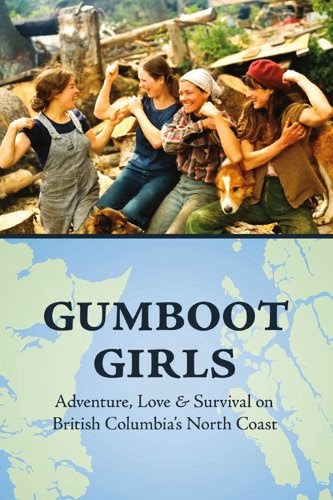
Have I piqued your interest in Haida Gwaii? You might also like a book that is a favourite of mine, Gumboot Girls by Jane Wilde and edited by Lou Allison (Caitlan Press, 2014). It's a compilation of memoir vignettes of adventurous women who lived in Haida Gwaii and Prince Rupert in the 1960s and 70s. You can find out more about these women on their Facebook page Gumboot Girls.


I was featured on Stone Cottage Adventures for Words on Wednesday for writing tips, stories, book reviews/tours, poetry, blog posts, current events/facts, and publishing books. - Margy

Wednesday, May 2, 2018

"Drawn to Sea" by Yvonne Maximchuk


The author/artist in action.
As you probably know, I’m drawn to books about Coastal BC and especially books about women who’ve chosen a rustic lifestyle. Yvonne Maximchuk wrote such a book, Drawn to Sea - Paintbrush to Chainsaw: Carving Out a Life on BC’s Rugged Raincoast (Caitlin Press, 2013).

After reading a book, I like to discover more about the author. Yvonne has a strong online.

Blog - Yvonne Maximchuk
Facebook - Yvonne Maximchuk
Caitlin Press - Yvonne Maximchuk
Email - searosestudio@hotmail.com

Review of Drawn to Sea

Yvonne left her lower mainland home to live in the upcoast wilderness. She always loved the outdoors, and is open to adventure. After her marriage ended, she and her two children, Theda and Logan, moved with her boyfriend Albert to Echo Bay on Gilford Island.

Her new life began in a rented float house. As you can imagine, this was a big part of the book’s appeal for me. Plus, Yvonne inspired me with her willingness to try new things outside of her comfort zone. Her tale about a bad storm that made her think that her “bold new life is about to end in tragedy after less than a month” reminded me of my own storm experience. It was just as unnerving, but way less dangerous.

Yvonne learns about wilderness living as she goes: fishing, canning, gardening (her float garden looks much like mine), using a chainsaw, building a house of her own (way beyond my skills), and two kids to raise and take to school by rowboat. I can imagine that each day brought new challenges and excitement.

Yvonne met Billy Proctor, a famous longtime resident of Echo Bay. Bill is a hardworking logger and fisherman who welcomes coastal travelers to enjoy his home. He helped Yvonne and Albert (who she later married). Yvonne and Bill became fast friends and fishing partners as well.

One of Yvonne's oil paintings.
Yvonne is an artist as well as an adventurer. She uses her speedboat “Sea Rose” to reach majestic locations to paint and draw. The cover of her book and the image to the left are examples of how she captures the essence of the land and sea she loves.

Yvonne has spent the last thirty years carving a life out of the rugged BC wilderness. I wish I’d had her courage earlier in life to take such a chance.

Yvonne up at the float cabin on Powell Lake.
Yvonne's books are available online, in BC book stores, and in BC Ferries gift shops.

I was fortunate to meet Yvonne in 2016 when she came to my float cabin. Since then, we've remained in Facebook and email contact.

I'm excited that I will be meeting up with her again this May for an adventure to Tofino on Vancouver Island, and to attend one of her art shows in Comox.

Have you ever been able to meet one of your favourite authors? How did it happen?

Join Stone Cottage Adventures for Words on Wednesday for writing tips, stories, book reviews/tours, poetry, blog posts, current events/facts, and publishing books. - Margy

Saturday, March 31, 2018

"Gumboot Girls" by Jane Wilde and Lou Allison


http://www.amazon.com/Gumboot-Girls-Adventure-Survival-Columbias-ebook/dp/B00MOPMJPS/ref=tmm_kin_swatch_0?_encoding=UTF8&sr=&qid=Do you ever feel out of step with time? My grandmother said I was born a generation too late because I enjoyed visiting her on the farm so much. But it took me thirty-five years to get in the spirit of the hippie back to land movement.

I enjoy books about women who live in remote locations. I found such a book in a BC Ferries gift shop. Gumboot Girls: Adventure, Love and Survival on British Columbia’s North Coast is a collection of thirty-four short memoirs that was compiled by Jane Wilde and edited by Lou Allison (Caitlan Press, 2014).

Jane was among many adventurous women who came to Coastal BC in the 60s and 70s. This book highlights the lives of fifteen women who landed on the remote islands of Haida Gwaii (known then as the Queen Charlottes). Nineteen of the women made their homes in or near Prince Rupert on the mainland.

Prince Rupert waterfront cafe in 1994.
From all across Canada, the United States, and even France they came. Many were drawn north because of the desire to live a self-sufficient lifestyle away from the pressures of society.

Some of the women followed men avoiding the draft and Vietnam War, some followed family and friends who had gone before them, and some came just for the experience of a lifetime.


Most lived in abandoned cabins or built their own during a time when restrictions were minimal or not enforced. Gardens were planted, chickens and goats raised, food canned for winter. For money, some fished with their men, worked seasonally in canneries, or took traditional nursing or teaching jobs. But getting to work was anything but traditional. Life on the north coast required boating skills and crossing dangerous waters in all kinds of weather.

Prince Rupert fishing boats in 1994.
Living near like-minded people resulted in communal activities and support. It was a time of free love, living simply off the land, and few responsibilities (except for their own survival). Fresh seafood that we consider expensive delicacies was free for the taking.

Some of the women stayed, but most moved on to finish their education or return to larger cities. Even so, their north coast experience shaped their futures and those adventurous years were never forgotten.

The Gumboot Girls stay in contact and have occasional book readings. Find out more here:

Caitlin Press - Gumboot Girls
Facebook - Gumboot Girls
Amazon.com - Gumboot Girls
Goodreads - Gumboot Girls

These were my formative years too. But it took me a much longer time break my bonds with city life and follow my dreams to Coastal BC. What were these years like for you? -- Margy

Saturday, March 3, 2018

"Thru-Hiking Will Break Your Heart" by Carrot Quinn


My reading this month has taken me on quite the adventures, from outer space, to life on a small island, to a thru-hike on the Pacific Crest Trail.

Carrot Quinn was living in a little trailer surrounded by the bustle of city life in Portland, Oregon. She was a self professed internet addict, making a meager living online and dog walking. Her life felt aimless. Then she discovered the online trail journals of people thru-hiking the Pacific Crest Trail from the Mexican to the Canadian borders.

With little experience and preparation she embarked on her quest to complete the 2660 mile grueling hike following a narrow band of dirt through scorching desert, rolling foothills, and the formidable Sierra Nevada range. Thru-Hiking Will Break Your Heart: An Adventure on the Pacific Crest Trail is the account of Carrot's physical, mental and emotional journey in 2013.

A section of the Sunshine Coast Trail.
Quinn's book is self published. It didn't have the publisher polish of books like Wild by Cheryl Strayed or A Walk in the Woods by Bill Bryson, yet it was a compelling read for me. You can feel the pain of Carrot's blisters, the pervasive thirst between water stops, the days of hunger followed by binging in nearby towns, the desire to connect with other hikers, and the glee at finding "trail magic" left by volunteers including snacks, drinks and even hot meals.

Just a little warning. Carrot is straight forward and blunt at times about her personal and trail life. I didn't find it off-putting but some might.

Reading books like this has inspired my husband to try hiking the Sunshine Coast Trail here in Powell River, BC. He's researched gear and is starting to put together what he'll need for a summer adventure. There are many entry and exit points along the Sunshine Coast Trail, so he's going to start small and complete the 180 kilometres (112 miles) a section at a time.

Margy (me) checking out backpacks.
I don't hike well, so I'll be Wayne's ground support. I'll drop him off and pick him up farther along. I may camp out with my truck while I wait for him to arrive. If I get into better shape by July, I may even try an easy leg.

If you are interested in the Pacific Crest Trail, here are some references:

Pacific Crest Trail Website
The Pacific Crest Trail Association Facebook

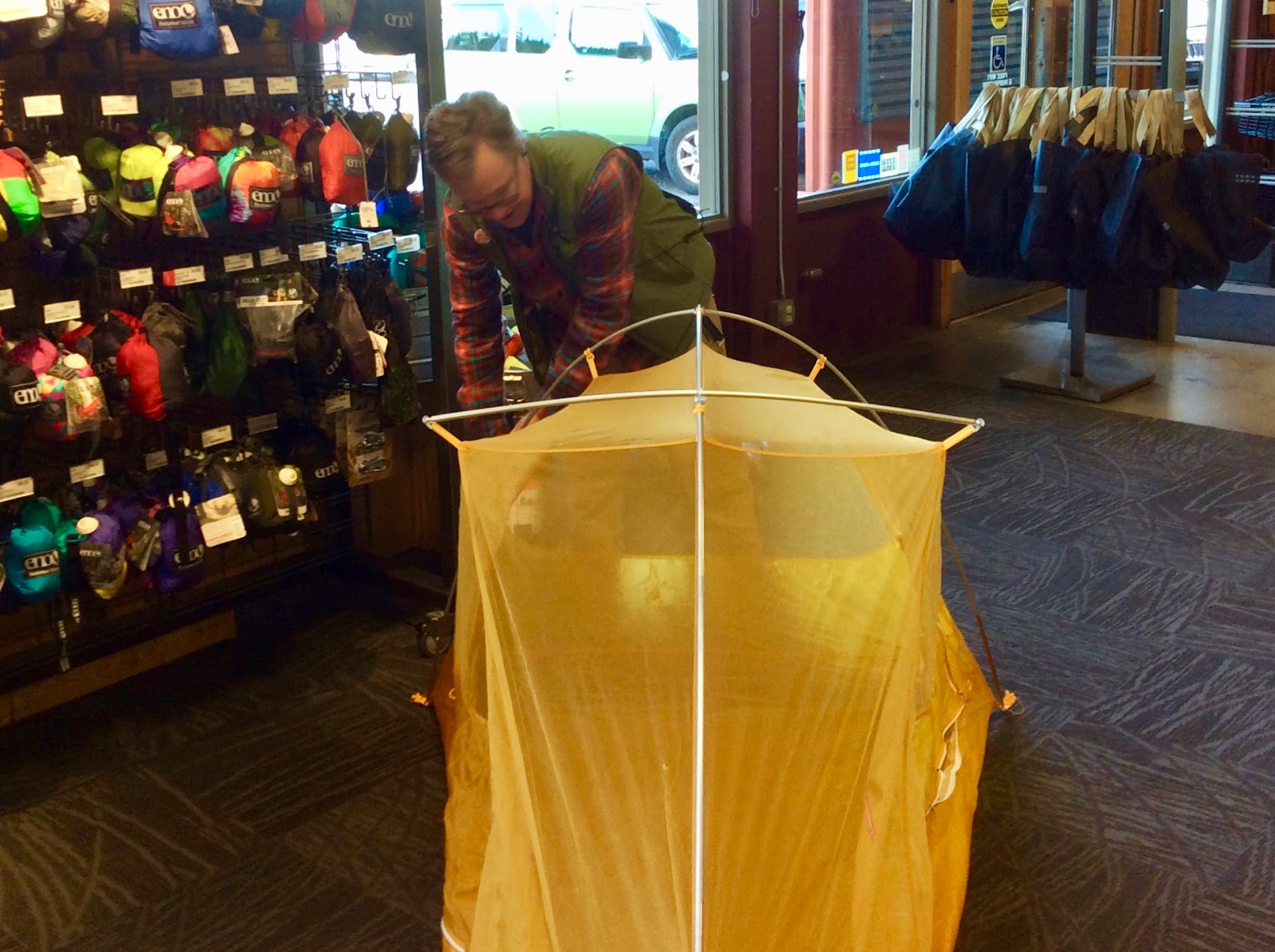
A clerk at REI shows Wayne a new tent.
For the Sunshine Coast Trail check out:

Sunshine Coast Trail Website
Sunshine Coast Trail Facebook
Tourism Powell River
Terracentric Coastal Adventures
The Sunshine Coast Trail by Eagle Walz

Have you tried any overnight hiking? What have your experiences been like? -- Margy

Saturday, February 3, 2018

"Artemis" by Andy Weir


I'm best known for reading and reviewing books about Coastal British Columbia and off-the-grid living. But once in a while I break the mold and read science fiction (Wayne's favourite).

Several years ago we read The Martian by Andy Weir. At the time Weir was an upcoming independent self-published Kindle author, but was quickly picked up by a traditional publisher (Crown, 2014) and his book was transformed into a blockbuster movie.

The most recent novel by Andy Weir is Artemis (Crown, 2017). The setting is earth's moon in the not too distant future. Space exploration has resulted in a permanent colony near the Apollo 11 landing site at the Sea of Tranquility where Neil Armstrong and Buzz Aldrin first touched down in 1969. Tourism is a large part of the moon's economy. Mining is another.

Jasmine (Jazz) is an entrepreneurial delivery person trying to break into the Extravehicular Activity (EVA) Guild to offer high paying tourist trips on the lunar surface to the historic landing site. She fails her test, but has learned the specialized skills needed for surviving outside of the colony's protective structures.

Jazz was born on the moon and has transformed her delivery job into a profitable smuggling operation.

Links she has forged with the colony's business and political leaders draws her into a scheme that could either get her deported to earth (a sentence almost worse than death) or the savior of the fragile colony.


It was a fun, thrill packed read, especially on my Kindle with it's built-in light. That's the best way to read at the cabin during long, dark winter nights. Artemis is also available in hardcover, paperback and audible versions.

Do you read science fiction? What are some of your favourite books? -- Margy